

They are more capable, thoughtful and responsive than they give themselves credit for.
This month, Freely turns six, and naturally I’ve found myself thinking about how much has changed since we began. But the thing I keep coming back to isn’t a feature we built or a business milestone we reached. It is what these years have taught me about home educators.
Those lessons haven’t come from one place. They have grown through homeschooling my own children, building Freely around real family life, listening to our community, reading feedback and watching what happens when carefully designed systems meet wonderfully unpredictable humans.
Over time, certain patterns became impossible to miss. Home educators are quick to notice where they are falling short, but much slower to recognise the thought, skill and care already holding their homeschool together. They worry about the lesson they didn’t finish, the week that went sideways or the routine they couldn’t maintain, while barely acknowledging everything they noticed, changed, researched and made possible along the way.
After six years, there are some things I wish more home educators knew about themselves.
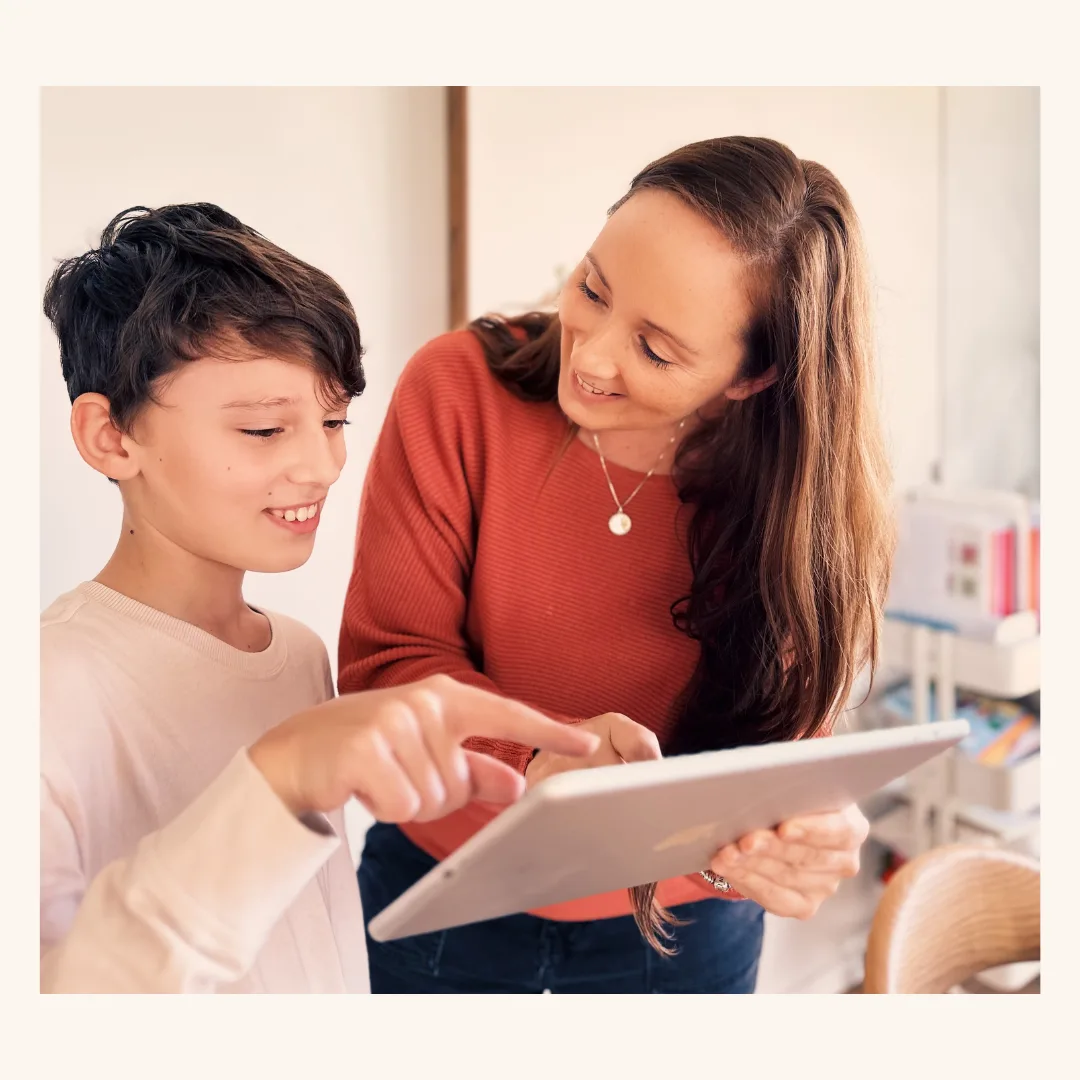
Home educators are far more capable than they think
Home education has a way of turning people into researchers, problem-solvers and accidental experts in subjects they never expected to know so much about. One minute you are comparing maths curricula, the next you are learning about executive function, and before long you are mapping possible university pathways for a child who still cannot remember where they left their pencil.
Much of that capability doesn’t feel especially impressive from the inside. It feels like reading late at night, trying something that doesn’t work, asking questions, changing your mind and beginning again. There is rarely a clear moment when someone hands you a certificate and declares that you now know what you’re doing.
But capability in home education is not having every answer before you begin. It is being willing to learn, paying attention to what is happening and making thoughtful decisions for the child in front of you. It grows quietly through all the ordinary moments when you notice, research, rethink and try again.
I think home educators often mistake uncertainty for incompetence. But questioning yourself does not mean you are incapable; sometimes it means you understand how much the decision matters.
You are not starting from nothing every time you sit down to plan. You bring years of knowing your child, watching them learn and discovering what helps your family function. A curriculum or planner can support that knowledge, but it should never teach you to distrust it.
When home educators cannot see their own capability, it often shows up first in the way they plan. Every good opportunity begins to feel like something they should be doing, which brings me to something else I have learned: home educators often overplan because they care.
Home educators overplan because they care
I have always had a tendency to overplan, and I see the same pattern in many of the families I speak with. We look at the week ahead and see possibilities: a wonderful book, a science experiment, a new project, music practice, a nature walk, the curriculum we intended to finish and the excursion we don’t want the children to miss.
Individually, every opportunity feels worthwhile, and saying no to any of it can feel as though we are taking something valuable away from our children. So we add it all, only to conclude that we planned badly or failed to follow through when the week cannot hold everything we imagined.
But overplanning is not always evidence of poor organisation. Often, it reflects how deeply a home educator cares. The difficulty is that care can make every opportunity feel equally important, even though they cannot all be given the same amount of attention at the same time.
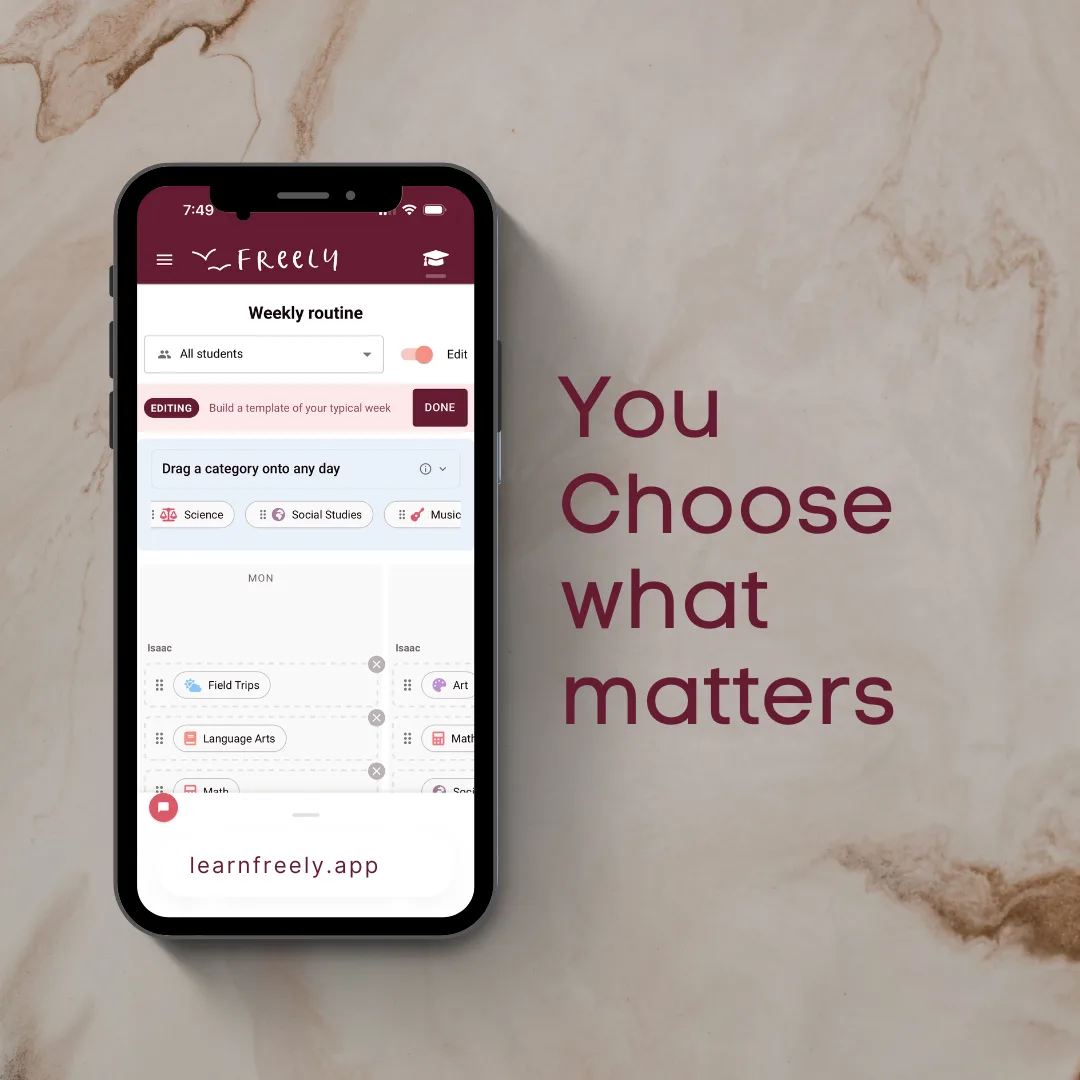
Recently, I shared a small revelation in our private Freely community—one of those lovely moments when something you’ve helped design surprises you in real life. I was planning my week in Freely Homeschool Planner, dragging our newly designed “Routine” placecards into “My Week,” when I noticed that each one seemed to carry more weight than an item on a checklist.
We had designed Routine to make a family’s priorities more visible, but I hadn’t expected the placecards to feel different too. I wasn’t simply adding another task; I was taking something we had said was important and giving it some of the time we actually had.
It reminded me of something I learned from Atomic Habits: even small changes to the systems around us can shape the choices we make. You can design something hoping it will work that way, but using it in real life is always the biggest test—and there it was, happening in my own planning.
That was the real aha moment. I wasn’t simply organising our week; I was choosing what was important enough to be given a place in it. When the purpose of planning is to fit everything in, anything left out can feel like failure. When the purpose is to choose what matters, we can recognise that something may be worthwhile without needing to happen right now. Everything worthwhile does not need to happen this week.
What home educators call inconsistency is often responsiveness
We make our plans using the information we have at the time—and perhaps a tiny bit of optimism that nobody will get sick, nothing will take twice as long as expected and no one will suddenly develop a burning need to investigate medieval plumbing in the middle of maths.
Then the actual week arrives.
A child needs more support, an interest leads somewhere unexpected or everyone reaches Wednesday and clearly needs a quieter day. Changing the plan in response isn’t necessarily inconsistency. Often, it means we noticed what was happening and made a thoughtful decision about what to do next.
Unfortunately, many planners are not nearly so understanding. The original plan is treated as though it were a legally binding agreement: if something didn’t happen on Tuesday, it becomes overdue, rolls into Wednesday and continues following you around until you deal with it. Before long, you aren’t planning the week ahead; you are doing admin to “fix” the perfectly reasonable decisions you made last week.
Of course, home educators still need to know what was skipped. We don’t want lessons quietly disappearing into the void every time life changes direction. But that information should help us decide what to do next, not arrive with a side serving of guilt and another pile of work.
That is the balance we have built into Freely. Families can see what hasn’t happened, but Freely doesn’t turn those changes into overdue warnings or automatically pile them onto the next day. The information remains available, while the decision about what happens next stays with the home educator.
A planner should have a better memory than you, not a stronger opinion than you.
Consistency in a homeschool does not have to mean that every week matches the plan. It can mean returning to the things that matter, finding your rhythm again when you lose it and continuing to move forward—even when real life has other ideas.
Home educators are carrying more of the homeschool than anyone can see
The mental load of homeschooling is difficult to explain because so much of it is invisible. It isn’t only remembering that maths needs to happen; it is remembering which lesson comes next, where the workbook was left, which child needs help, what needs printing, which resource wasn’t working, what sparked an interest yesterday, and what evidence might be useful for reporting months from now.
It holds the plan, the learner, and the longer-term vision at the same time. Then there is the additional weight of knowing that much of this work is invisible to everyone outside your home—and occasionally feeling as though you need to prove that it is happening at all.
We shouldn’t have to constantly defend the validity of our children’s education simply because it doesn’t look like school. But there are times when records are genuinely needed, whether for official reporting, sharing progress with someone else, or reassuring ourselves when that familiar doubt creeps in. When that happens, Freely has your back.
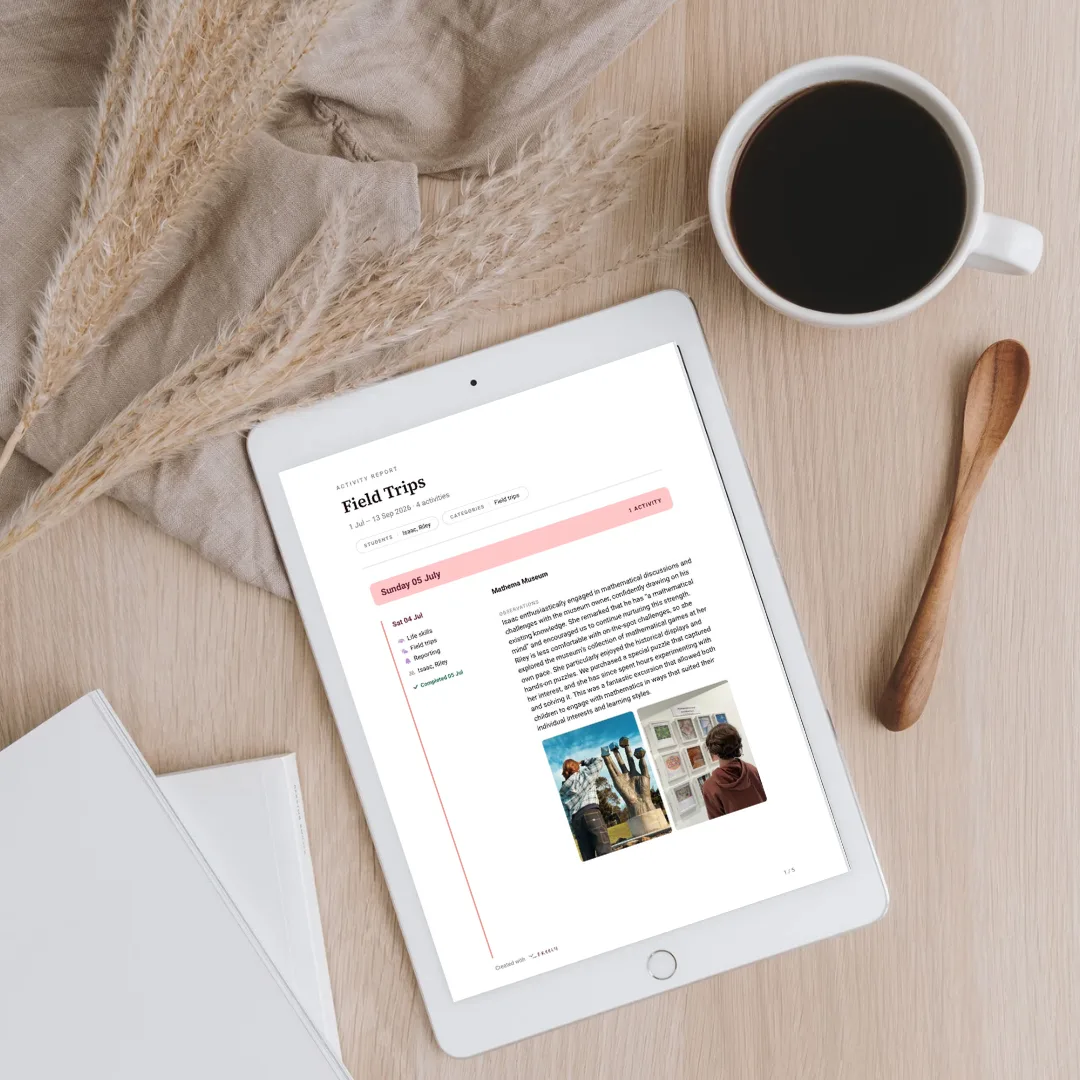
Freely holds the notes, photographs, completed work, and little observations you collected along the way, then helps you bring them together when you need them. A helpful planner should not hand you an entirely new administrative project or expect you to reconstruct six months of learning from memory with the camera roll on your phone.
Many home educators assume they need to become better at carrying all of this. I don’t think they should have to carry so much of it in the first place. Needing somewhere reliable to place that mental load is not a sign that you are disorganised; it is simply recognising that human working memory was never meant to run an entire homeschool by itself.
Home educators recognise learning, but don’t always trust that it counts
One of the lovely things about homeschooling is how close we are to learning as it happens. We see the moment a puzzled expression changes because something has finally clicked. We hear the question that reveals genuine understanding, and we watch a passing interest turn into days—or sometimes weeks—of determined investigation.
Home educators recognise these moments, yet when Friday arrives, it is often the unfinished lessons that catch our attention. The learning that happened instead can quietly disappear from view, not because it mattered less, but because it didn’t leave behind something neat for us to point to.
I think most of us have learned to trust learning more easily when it looks official. A finished worksheet, formal lesson, or completed project feels easy to count. A conversation in the car, a practical skill, a thoughtful question or an enthusiastic rabbit trail can feel less certain, even when it tells us far more about what a child understands.
This is where Freely helps. It gives families simple ways to capture learning around the student as it naturally happens—through a quick observation, a photograph, a conversation or a short video. Something as simple as filming a swimming stroke at the beginning of term and again at the end can show the progress beautifully, without needing paragraphs of explanation.
Student Login has shown me another side of this that I didn’t fully appreciate when we first designed it. I thought it would primarily help older children become more independent, but in my own homeschool it has opened another way for my eldest and me to communicate.
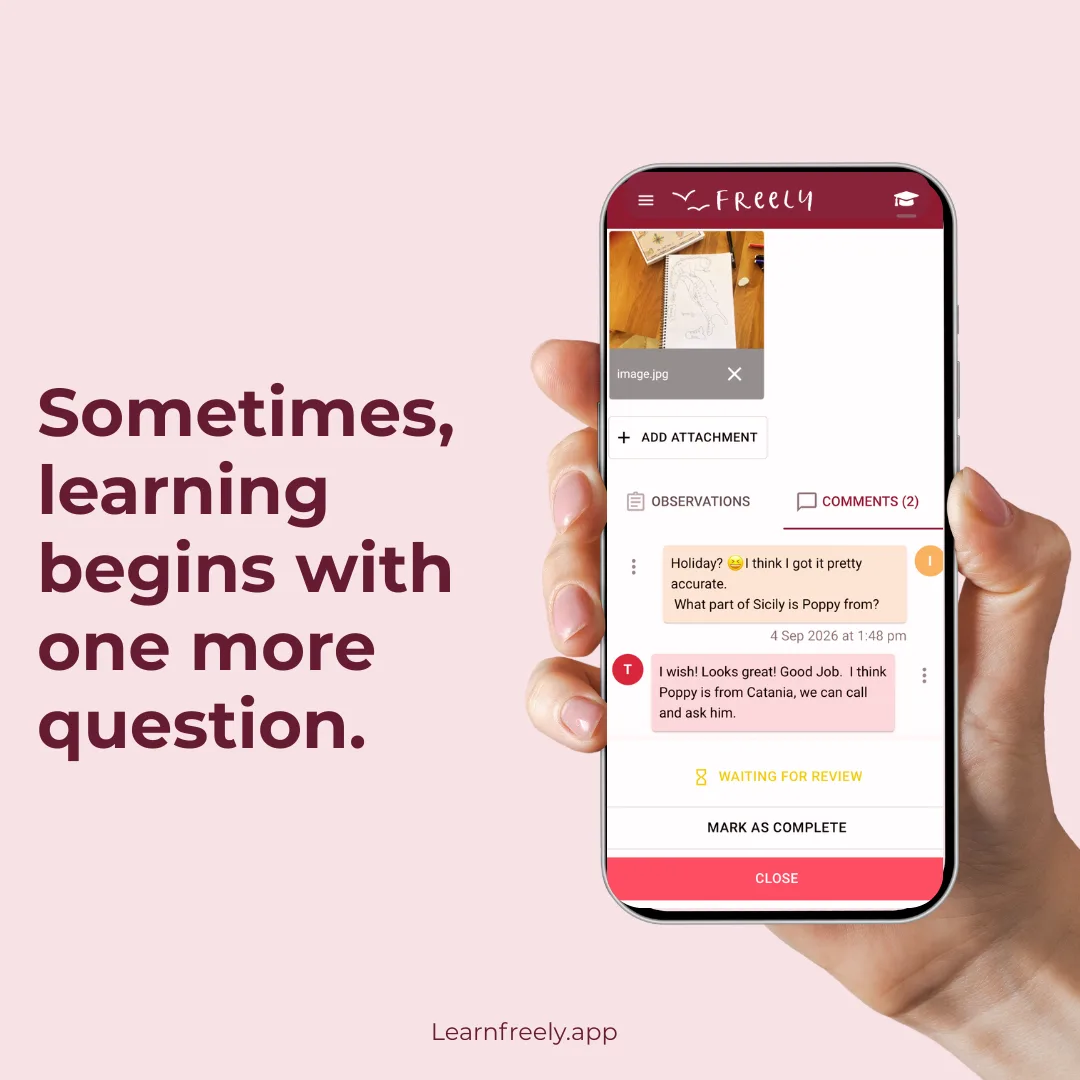
He has never been as chatty as my youngest, and the chat gives him space to ask questions he might not have bothered to call me over for, explain where he is stuck, or show me where an activity has taken him. It also allows me to give feedback gently. Somehow, the same suggestion can be received very differently when it appears quietly in a chat rather than coming directly from Mum across the table. It has softened a part of home education that can sometimes feel more confronting than either of us intended.
Those conversations are part of the learning too. They show the questions that were asked, where support was needed, how an idea developed and what captured the learner’s attention. Freely can hold on to that naturally, without asking the home educator to recreate the entire story months later when reporting time arrives.
Freely doesn’t need to decide whether these moments count as learning. They already do. It gives families simple ways to hold on to them, so that when doubt creeps in—or reporting time rolls around—they can see just how much was happening all along.
Home educators don’t need to be punished for stepping away.
Sometimes life becomes heavy, and the homeschool planner is one of the first things we stop opening. Not because we no longer care about learning or have given up on being organised, but because illness, appointments, stress or overwhelm have taken every bit of capacity we had.
When we are finally ready to return, the planner should help us find our feet again. Unfortunately, some systems greet us with every missed date, unfinished lesson and overdue warning that accumulated while we were away. Nothing says lovely to have you back quite like a dashboard listing 47 things you apparently failed to do.
Before we can even think about the week ahead, we are expected to repair the old one. Lessons need to be rescheduled, warnings cleared, and unfinished work dealt with until returning to the planner feels like another job we don’t have the energy to begin. The planner has turned an interruption into a debt.
I have watched so many families reach this point, and for many, this is exactly when they find Freely. They want a planner that can handle the detail without turning a difficult week into even more work.
That matters to me because I never want Freely to become another system a home educator avoids when life goes off track. Families may still need to step away from planning for a while, but when they return, Freely doesn’t require them to repair the past before they are allowed to move forward. They can see what is waiting, decide what still matters and take the next manageable step.
Of course, I don’t want lessons quietly disappearing every time life changes direction. Home educators still need to know what hasn’t happened, but that information should help them make their next decision—not make them feel guilty or give them three weeks of planner admin to sort out first. Freely should remember where they were without making them answer for being away.
Home educators who step back are not looking for permission to give up. They need an easy way to continue when they are ready, and the best support keeps the door open and the light on until they return.
Home educators deserve support that respects them
After six years of listening to home educators, there is something I know without needing anyone to say it directly: they are tired. When it comes to planning and organising their homeschool, most are already doing the very best they can with the time, energy and tools they have.
They don’t need another voice telling them to try harder or fit more in. They need support that recognises how much thought is already going into their days, respects their knowledge of their children, and helps carry some of the work that no one else can see.
The truth is, home educators don’t always have the spare capacity to explain exactly what they need from a planner. They can usually tell me where they are getting stuck or what is making life harder, but stepping back, diagnosing the problem, and designing the perfect solution is another job—and they already have quite enough of those. If I had built Freely using only the things people directly asked me for, we would be looking at a very different planner today.
I realised that quite early, so I learned to listen for what was sitting underneath the question. I completed a professional organisation course and researched shame, habits, personality traits, how children learn, different homeschooling approaches, ADHD organisation, and the many ways people naturally organise themselves. Yes, organisation styles are a real thing, which explains why the same beautifully colour-coded timetable does not magically transform all of us into the same highly organised person.
None of that research was about finding a clever new way to make home educators do more. I wanted to understand why thoughtful, capable people so often walked away from planning systems believing they were the problem.
Home educators are wonderfully different. We have different philosophies, different children, different capacities and very different-looking days, but we are the same where it counts. We will move mountains for our children. We will research into the wee hours of the morning, save and sacrifice for the eye-wateringly expensive maths curriculum because our child has decided they want to become an engineer, and map out three different pathways to university just to make sure no door closes too early.
We do all of this because we care enormously, even though home education can sometimes feel like one of the most thankless jobs in the world. So much of the thought, preparation, and sacrifice happens quietly, with no certificate arriving in the mail to confirm that we are doing a good job.
That understanding is built into Freely. It shows you what was skipped without treating it as a failure, helps you find your way back without creating an administrative mess to repair, and gives you simple ways to preserve learning without turning every day into a documentation exercise.
Freely offers enough structure to support your family, but never asks your family to bend around the planner.
Freely is still just a tool, and I genuinely want every home educator to find what works for them. If that turns out to be a notebook, a wall planner, or a slightly chaotic collection of sticky notes, I will still be cheering them on. But when a family chooses Freely, I want them to feel the care behind it. Freely wasn’t built around the plan alone; it was built with the person carrying it in mind.
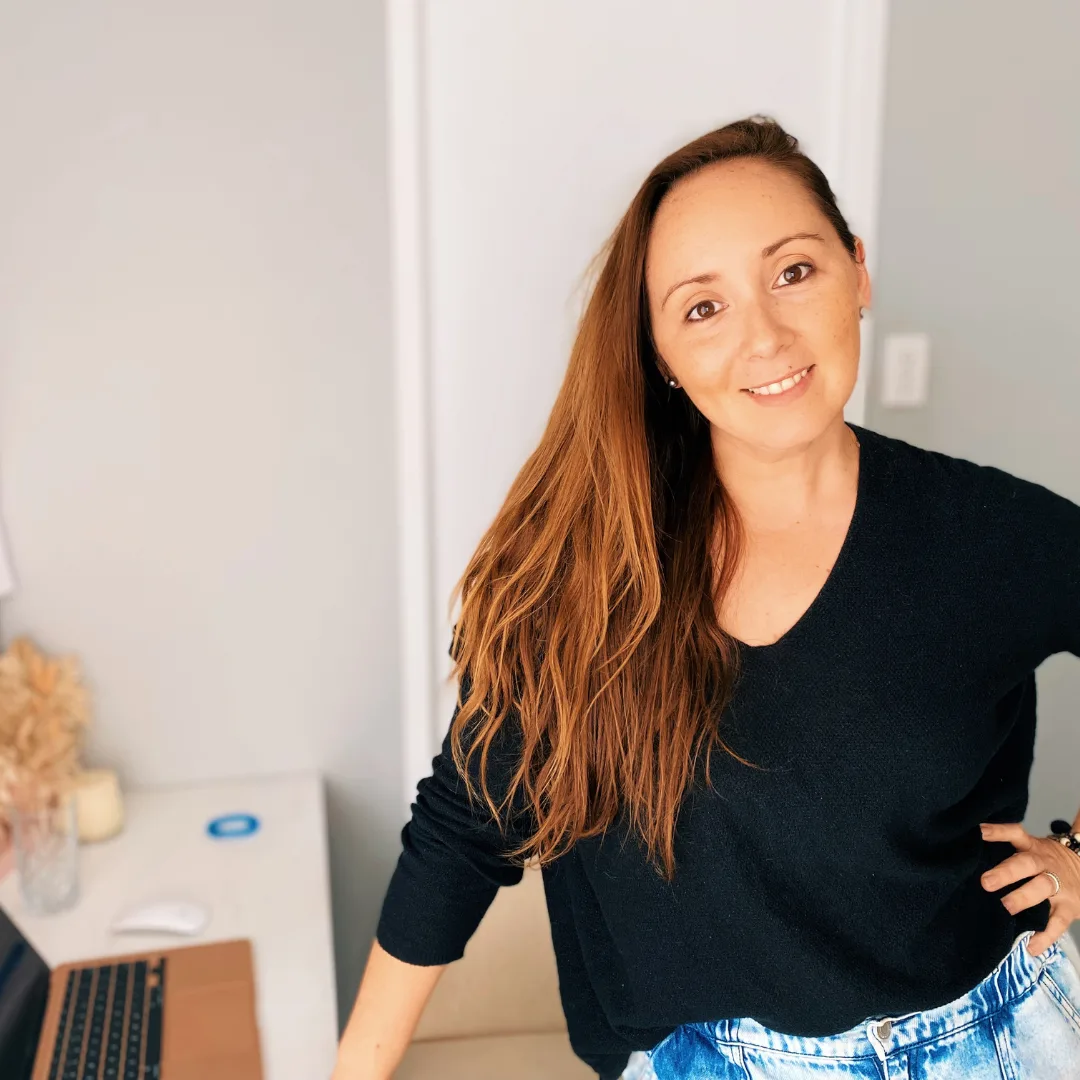
There will also always be real people behind Freely. Customers are often surprised when they open the chat looking for help and discover that the person answering them is me. Sometimes I can point them towards a feature, sometimes we think through how Freely might work within their particular homeschool, and sometimes I simply listen when something isn’t working. Those conversations are not separate from the work of building Freely; they are part of how Freely gets built.
To me, innovation is not about adding more simply because we can. It is noticing what is making life harder, understanding why, and finding a gentler way forward.
To every home educator who has used Freely, returned after time away, told a friend, shared feedback, asked a question, or trusted us with a small part of their homeschool: thank you. Freely has not been shaped by perfect weeks; it has been shaped by your real ones.
My mission is to make Freely the soft place to fall, the quiet teacher aide beside you, and the thing that has your back on the hard days. When you look back at everything you have held, noticed, adapted, and made possible for your children, I want it to gently remind you: you’re doing a great job.