

And what actually makes planning work
We start our homeschool with thoughtful plans: lessons we care about, projects we’re genuinely excited about, maybe even a colour-coded week that feels beautifully put together.
And then real life hits.
One child takes an impressive amount of time just to get moving in the morning. Another is suddenly deep in a marine biology phase, and pulling them away for spelling feels… questionable. The week fills with driving, appointments, forgotten library books, and the invisible work of running a home.
Nothing explodes.
The plan just slowly stops fitting.
And somehow, even though homeschooling is the most alive and flexible part of our lives, the planner is the one place that feels rigid, unchanged, quietly suggesting we’ve fallen behind.
If you’re constantly reshuffling weeks, mentally carrying unfinished lessons forward, or feeling behind before Wednesday even arrives, it may not be a discipline issue.
It might be your planner.
Why We Blame Ourselves Instead
When a plan stops working, most of us don’t question the system.
We question ourselves.
Maybe we need to be more structured. Maybe we just need to try harder next week.
But what if the issue isn’t effort?
What if it’s alignment?
Many traditional planning systems, especially those originally designed for classrooms, assume predictability. Fixed time blocks. Even pacing. Learning that unfolds neatly and linearly.
Homeschool life rarely does.
It stretches. It pivots. It deepens unexpectedly. It slows down without warning.
And when the system can’t absorb that movement, the weight lands on you.
That tension between a living, breathing homeschool and a rigid planning structure is exactly what led me to build Freely.
Not because digital is superior. Not because paper is wrong.
But because when a system is designed to bend with your week, you stop carrying the strain alone.
The Pattern So Many of Us Recognise
A new planner. The first few weeks are beautiful: neat handwriting, colour coding, good intentions.
Then gradually… it fades.
Pages get messy. Lessons move. You start rewriting unfinished tasks. Eventually, the planner is abandoned.
Not because you stopped caring.
Because rigid systems don’t adapt.
Consistency doesn’t fail because of laziness.
It fails when systems create too much resistance.
Paper Has a Role — Just Not That One
This isn’t an argument against paper.
Paper is wonderful for brainstorming. For mind maps. For dreaming at the kitchen table. For capturing early thoughts.
But early thoughts aren’t operational systems.
When planning needs to stretch, move, adjust, or respond to a real week, paper can become fragile. Not wrong, just limited in how much movement it can hold.
The shift for many families isn’t abandoning paper.
It’s separating idea generation from system execution.
Use paper to think.
Use a flexible system to carry the plan forward.
What Actually Makes Planning Work
If planning has felt heavier than it should, it’s worth reassessing the structure underneath it.
Healthy systems tend to share a few qualities:
- Planning and scheduling aren’t tangled together
- Lessons can easily move without creating guilt
- Reporting isn’t a separate burden
- Cross-age group learning can be captured easily
- Mental load decreases rather than increases
- Collaboration with your children is supported
The right system doesn’t just organise learning.
It reduces friction.
A Small Shift That Changes Everything
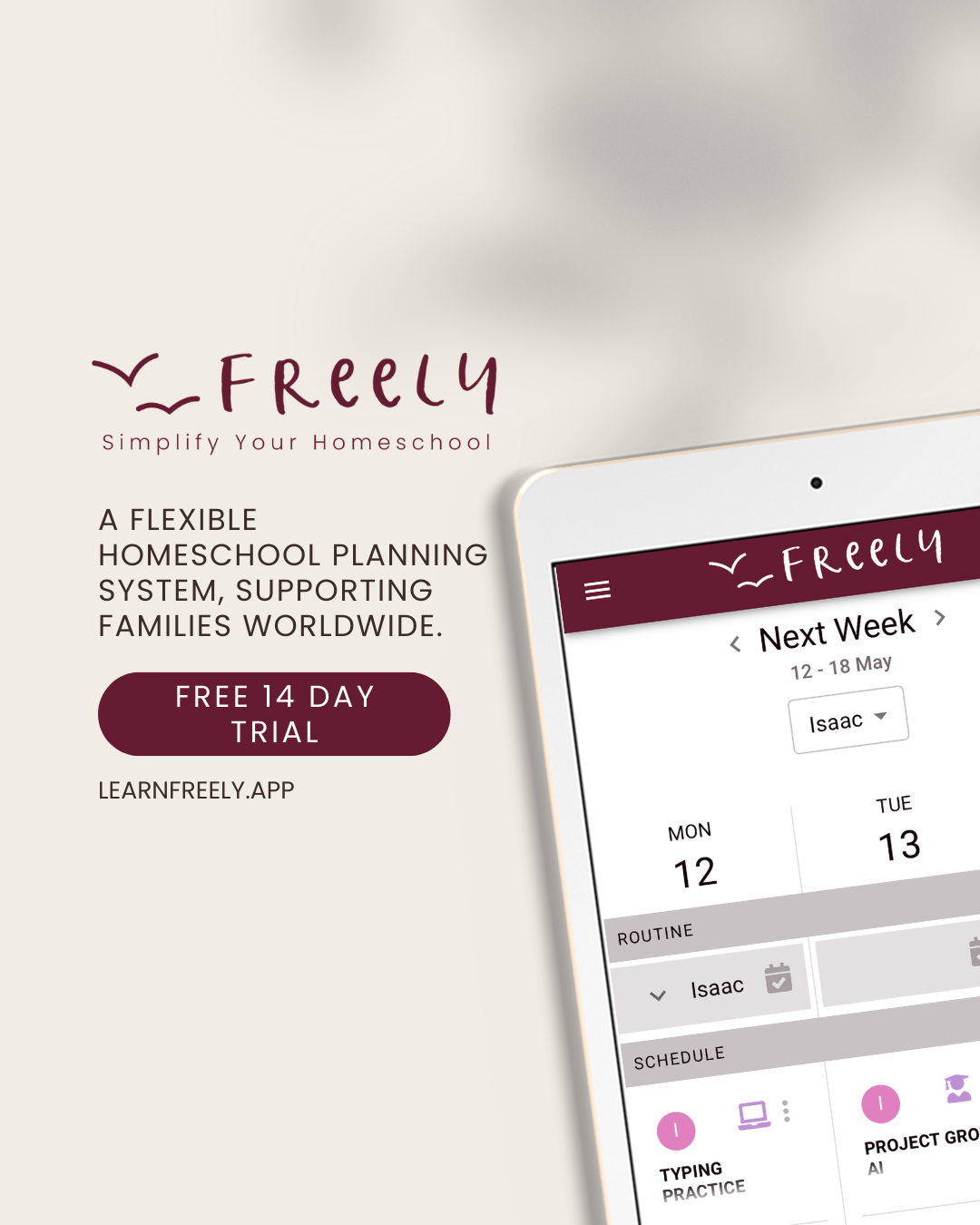
That’s the thinking behind Freely — our digital homeschool planning platform built to hold real life. (If you’d like a detailed breakdown of every feature inside Freely Homeschool Planner, including Student Login, flexible week planning, progress tracking, and simplified homeschool reporting, you can explore our complete guide to Freely Homeschool Planner features. )
When you open the planner to begin a lesson, you can also:
- Access your PDF curriculum
- Snap a photo of completed work
- Jot a quick observation
- Track progress
Planning, learning, and reporting no longer live in separate worlds.
For many home educators, especially ADHD parents, that reduction in friction is powerful.
Freely is available at learnfreely.app and is designed specifically for flexible, real-life homeschooling.
If you’d like to explore it for yourself, you can start a 14-day free trial here: