

The story of Freely Homeschool Planner App
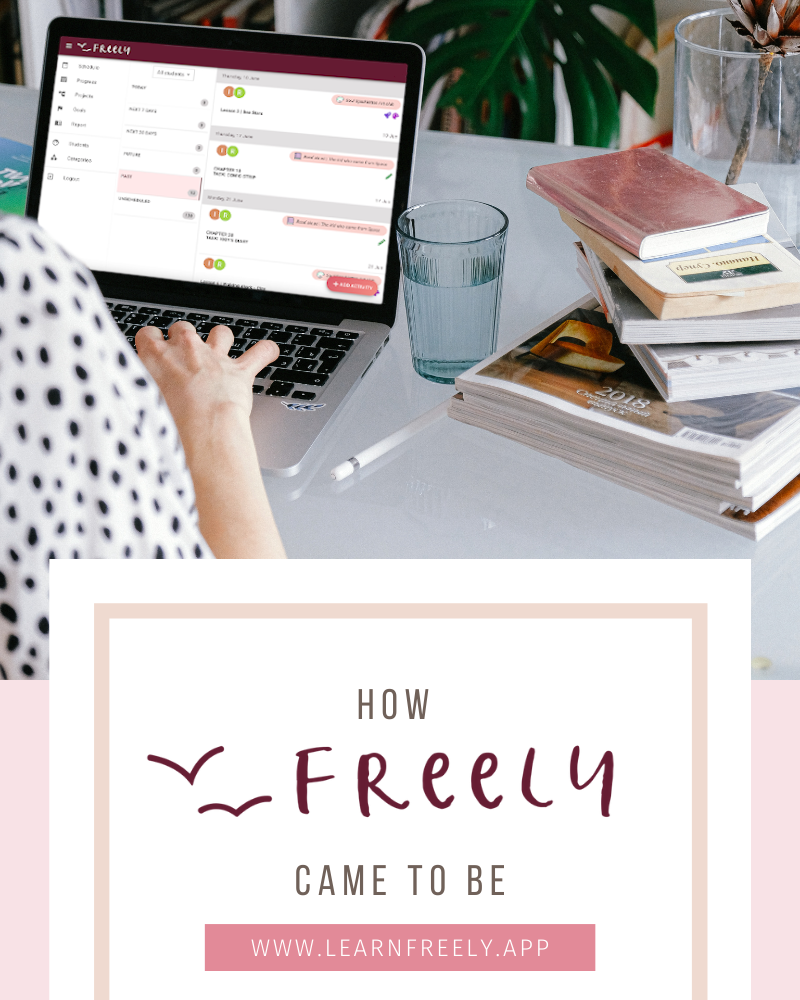
This is the story behind why we built Freely, and the research, frustration, and discoveries that shaped it.
When Planning Doesn’t Fit Real Life
For a long time, the idea of Freely lived quietly in the back of my mind.
Not as a business idea. More like the faint outline of a solution to a problem I couldn’t quite solve.
At first, I assumed the problem was mine.
Surely someone had already created a homeschool planner that worked for real life, something flexible enough to adapt when our weeks changed, but clear enough to help us stay consistent.
So I tried them. Paper planners, Digital tools, Spreadsheets, Beautifully designed systems that promised to bring everything together.
And every time, I started with the same feeling of hope.
This one might work.
But sooner or later, they all seemed to fall apart in the same place.
Real life.
Because homeschooling, at least in our home, never unfolded the way a planner expected it to.
The Planner I Never Opened
At the same time, our dining table was buried under curriculum.
Printed PDFs clipped together, workbooks stacked in uneven piles, post-it notes slipping out of textbooks, lesson ideas scribbled in margins.
Planning felt completely separate from learning.
And that separation turned out to be the real problem.
I would buy a planner, hopeful and beautiful, and carefully transfer all our plans into it. And then I would forget to open it.
The planner existed outside our actual learning flow. I had to remember to check it, and when real life inevitably got busy, it was the first thing to fall away.
When I stopped referring back to it, our consistency quietly slipped.
And the familiar voice crept in again: We’re not doing enough.
What Home Educators Kept Asking For
As I spoke with other homeschooling families, I started hearing the same needs repeated again and again.
Not just from families like ours, but across many different homeschooling styles.
Some common themes kept appearing.
Families wanted flexibility — the sense that they could steadily work toward their plans while still leaving room for the unexpected.
They wanted a simple way to capture learning moments, so meaningful discoveries weren’t lost in scattered notes or camera rolls.
They wanted the freedom to organise curricula in a way that suited their family, rather than forcing their homeschool into someone else’s system.
They needed a way to find things quickly when it was time for records, evidence, and reporting.
And perhaps most importantly, they wanted a tool that didn’t add more pressure — no rigid deadlines, no flashing overdue alerts, no overwhelming checklists. Instead, they wanted something that supported the way their families actually learned.
Those conversations became our blueprint.
Searching Beyond Homeschooling
I had already read every popular homeschooling book I could find.
Philosophy, curriculum theory, and educational approaches.
Worldschooling, Unschooling, and Classical Education. They inspired me.
But they didn’t help me manage the real, day-to-day challenge of homeschooling: the mental load of planning, organising, and keeping everything moving forward.
None of them offered meaningful guidance on homeschool organisation or planning.
Over time, I realised that the real challenge wasn’t motivation — it was designing systems that could support real homeschool rhythms.
(We explore this idea further inHow to Create a Homeschool Planning System That Actually Works).
So I shifted my research.
If homeschool literature wasn’t solving the problem, perhaps productivity and organisation could.
I dove into systems thinking, life administration strategies, ADHD-focused organisation, and decluttering frameworks. Habit formation and Professional organising methods. I completed a professional organising course.
I read extensively about ADHD and organisation. I studied productivity research and behavioural design. I explored what actually makes systems stick, not just look good.
This wasn’t casual reading.
It was immersion.
One of the unexpected gifts of ADHD — at least for me — is the ability to go all in on research. When something matters, I don’t skim it. I live in it.
And I began to understand how many of those systems could be adapted to homeschooling.
I learned how to manage physical clutter.
But what fascinated me even more was the mental clutter. Because that was where homeschooling often became heavy.
A System, Not a Goal
One principle became foundational, reinforced in books like Atomic Habits by James Clear:
You don’t rise to the level of your goals. You fall to the level of your systems.
That idea clarified everything.
I didn’t lack commitment. What I lacked was a system that made consistency natural.
So I began asking a different question:
What if the planner wasn’t something extra to check? What if it was woven directly into the learning itself?
Designing Freely
The first feature we built was Projects. Instead of planning separately from the curriculum, you could upload your PDF directly into Freely. As you scroll through it, lessons can be linked to specific pages. No printing, no retyping, no flipping between systems.
And here was the unexpected breakthrough. If I wanted to access our curriculum, I had to open Freely. I was already inside the system. Which meant I naturally began checking our plans, adding notes, recording learning, and adjusting the week as we went.
Consistency didn’t come from discipline. It came from design.
From that foundation, Freely began to grow intentionally.
Some features emerged early. Others were shaped later as families began using the system and sharing their experiences with us.
We created Week View and Routine — not as productivity tools, but as priority tools. They help families see what actually matters in a given week, reducing the decision fatigue that often leads to burnout.
We added Observations so learning moments could be captured naturally, rather than disappearing into camera rolls or scattered notebooks.
Then Reporting — designed to build automatically as you go, removing the familiar end-of-term scramble so many families experience.
Later, we introduced Student Login, encouraging collaboration between home educator and student and allowing planning to become shared ownership rather than silent pressure.
But as Freely began to take shape, we knew something important.It couldn’t just work for our home.
It had to work for many different homeschooling rhythms.
Built With Families Around the World
Before releasing Freely more widely, we invited families to test it with us.
Hundreds of homeschooling families from around the world joined our beta program: worldschoolers, unschoolers, classical educators, and eclectic curriculum mixers.
Each philosophy stretched our thinking.
Each rhythm challenged our assumptions.
Each family helped shape what Freely would become.
Over time, patterns began to emerge. Almost everyone felt like they weren’t doing enough. Almost everyone was juggling too much. And very few had found a system that truly worked for their real days.
Freely wasn’t built around one method. It was refined by real homes, living real weeks.
What I Believe About Planning
There are plenty of planners out there. In fact, I see new ones appear all the time feature-packed, impressive, constantly expanding.
It’s easy to get pulled into that spiral. To compare feature lists, to keep adding more, to feel the pressure to build the next big thing simply because you can.
But when I look more closely at many of those long lists of features, I see something else.
I see clutter.
I see distraction.
I see complexity layered on top of an already heavy mental load.
And the families I speak with don’t need more complexity. They need clarity.
Because the real challenge in homeschooling isn’t writing plans.It’s holding them in real life.
It’s the mental load of managing multiple children, different interests, and ever-changing weeks. It’s the decision fatigue of trying to prioritise what actually matters. It’s the quiet guilt that creeps in when systems break down and you begin to wonder if you’re doing enough.
What families need isn’t another feature-packed planner. They need a system that works with real days.
A system that supports consistency without pressure. A system that reduces mental clutter instead of adding to it. A system that helps families focus on what actually matters this week.
That belief shaped every decision we made while building Freely.
Not bigger, more intentional.
The most rewarding part of building Freely hasn’t just been designing features. It’s been listening to our beta testers, to our customers, and to the wider homeschool community.
Through those conversations I began to recognise the same patterns again and again: the mental load, the quiet shame many parents carry, and the feeling that no matter how hard they try, they are somehow falling short.
So every decision we make comes back to one simple question: Does this make homeschooling lighter? If it doesn’t, it doesn’t belong.
Because Freely was never meant to be just another planner. It’s a system, one designed to support real families living real weeks, in the beautiful and unpredictable rhythm of homeschooling.
You can explore how Freely works, or learn more about the journey and people behind it on our About Us page.